
Imagine standing at the precipice of a new economic era, where the boundless rivers of Sarawak no longer just carve through ancient rainforests but fuel a revolution that could redefine Southeast Asia’s energy landscape.
This is not a distant dream it is the unfolding reality of Sarawak’s hydrogen economy, and for the state’s vibrant youth, it represents the opportunity of a lifetime to build careers, launch ventures, and shape a sustainable future right here at home.
With Sarawak’s GDP projected to climb at an average of 4.6 percent annually from 2026 to 2030, and over RM100 billion in strategic investments flowing into the state’s economy over the next five years, the momentum is undeniable.
At the heart of this transformation lies the Sarawak Hydrogen Economy Roadmap (SHER), a visionary blueprint launched by Premier Datuk Patinggi Tan Sri (Dr) Abang Haji Abdul Rahman Zohari bin Tun Datuk Abang Haji Openg that positions Sarawak as the region’s clean hydrogen leader by 2035.
For young Sarawakians with ambition, technical curiosity, and a passion for sustainability, the hydrogen economy is not just a policy document it is a launchpad for personal and professional growth in industries that will define the 21st century.
The Premier has consistently framed this transition as a youth-centric opportunity, declaring with conviction: “The youth of Sarawak are not merely the leaders of tomorrow; they are the catalysts of today’s development across all sectors, and it is through their agility, innovation, and commitment to excellence that we will transform our green economy vision into tangible prosperity for all.” This is more than inspirational rhetoric; it is a strategic invitation backed by concrete infrastructure, training pathways, and international partnerships.
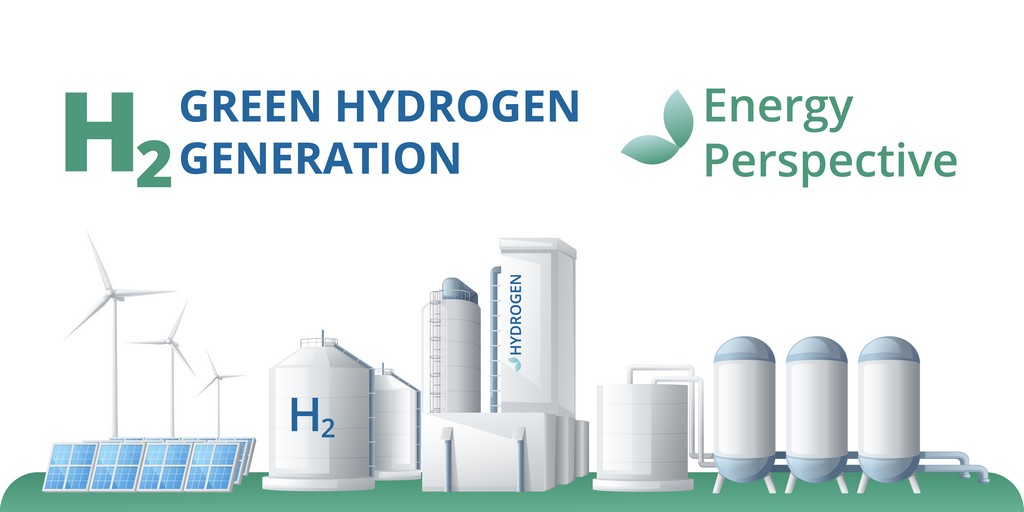
Sarawak’s hydrogen economy spans a vast value chain from renewable-powered electrolysis and cryogenic purification to hydrogen transport, storage, and end-use applications in mobility, industry, and power generation, and each segment opens doors for young talent.
Consider green hydrogen production: with Sarawak’s abundant hydropower already supplying over 70 percent of the state’s electricity, young engineers, technicians, and data analysts can contribute to optimizing electrolyser operations, integrating AI for real-time efficiency gains, and scaling production at mega-projects like the H2ornbill and H2biscus initiatives in Bintulu, which together aim to produce 240,000 tonnes of green hydrogen annually for export.
These are not entry-level roles; they are high-skilled, future-proof careers that command competitive salaries and offer pathways to leadership in a globally traded commodity.
Beyond production, the purification and certification stages of the hydrogen value chain present equally compelling avenues for youth engagement.
Achieving the 99.97 percent purity required for fuel cells demands expertise in cryogenic distillation, pressure swing adsorption, and membrane separation technologies, fields where Sarawak is actively building local capacity through partnerships with institutions like UNIMAS and international certification bodies.
Young chemists, materials scientists, and quality assurance specialists can pioneer hybrid purification systems that balance energy efficiency with ultra-high purity standards, while digital natives can leverage blockchain and IoT platforms to develop transparent tracking frameworks that verify hydrogen’s renewable origin, a critical requirement for accessing premium markets in Japan, South Korea, and Europe.
As Premier Datuk Patinggi Tan Sri (Dr) Abang Haji Abdul Rahman Zohari emphasized at the Hydrogen Economy Forum 2025, “When I say, ‘Sarawak is Hydrogen Ready’, I am essentially saying that the Sarawakian Hydrogen Economy is at its heart; building an ecosystem where our young people can innovate, collaborate, and lead on the global stage.”
This ecosystem is already taking shape: Sarawak Skills has launched the nation’s first hydrogen fuel cell vehicle safety training programme, while Centexs Dalat serves as a testbed hub for hydrogen-based maritime technologies, creating hands-on learning opportunities that bridge classroom theory with industry practice.
The applications of hydrogen extend far beyond industrial corridors, opening diverse entrepreneurial pathways for youth across Sarawak’s urban and rural landscapes.
Take the Autonomous Rapid Transit (ART) system in Kuching, powered by hydrogen refuelling stations set to produce 1,900 tonnes annually by 2025.
Young entrepreneurs can develop complementary services from app-based mobility platforms and maintenance startups to tourism experiences showcasing Sarawak’s clean transport innovations.
In agriculture, hydrogen-derived ammonia offers a low-carbon alternative for fertilizers, creating opportunities for agri-tech innovators to design precision farming solutions that boost yields while reducing emissions.
For those passionate about climate action, Sarawak’s emerging carbon markets, underpinned by the Environment (Reduction of Greenhouse Gas Emissions) Bill 2023, enable youth-led ventures in carbon accounting, verification, and trading sectors projected to attract USD7 billion in green economy investments over the next decade.
Premier Datuk Patinggi Tan Sri (Dr) Abang Haji Abdul Rahman Zohari has underscored this expansive vision: “Collaborating with governments and industries, we are expanding hydrogen, renewable energy, and carbon markets while strengthening regional energy security. Beyond collaborations with Japan, South Korea, China, and the UAE, we continue engaging global stakeholders to grow low-carbon industries, develop sustainable infrastructure, and drive innovation in clean energy solutions.”
This outward-looking strategy ensures that Sarawakian youth are not just local participants but global contributors, equipped to compete and collaborate in international clean energy networks.
Critically, the government has embedded support mechanisms to ensure youth can access these opportunities regardless of background.
The Sarawak Micro Credit Scheme (SMCS) and Bumiputera Youth Entrepreneur Development Programme (TUBE) provide soft loans and grants up to RM15,000 for green startups, while the upcoming Sarawak Free Higher Education Scheme (FTES) will remove financial barriers to tertiary studies in sustainability fields.
Technical and vocational training is equally prioritized: Sarawak Skills offers specialized modules in hydrogen technology, and teaching staff are being sent to China for advanced training to bring world-class expertise back home.
These initiatives reflect a holistic understanding that building a hydrogen economy requires not just infrastructure but human capital and that investing in youth is investing in Sarawak’s long-term competitiveness.
As the Premier noted when announcing strategic green economy partnerships, “Such investments will create many new job opportunities, particularly high-skilled jobs, in line with our efforts to improve household income. With this investment, along with others that are ongoing or expected to come into Sarawak, I am confident we can achieve the target.”
The hydrogen economy also aligns powerfully with Sarawak’s broader sustainability leadership, creating synergistic opportunities for youth who care about both prosperity and planetary health.
With 62 percent of Sarawak’s landmass under forest cover and over 2.2 million hectares certified for sustainable timber production, young conservationists, GIS specialists, and eco-tourism entrepreneurs can integrate hydrogen solutions with nature-based carbon projects, developing business models that generate revenue while protecting biodiversity.
Similarly, Sarawak’s leadership in renewable energy, surpassing its 60 percent renewable capacity target ahead of schedule, provides a stable, low-cost power foundation for energy-intensive hydrogen production, creating a virtuous cycle where clean energy enables green industry, which in turn drives further renewable investment.
This integrated approach is what Premier Datuk Patinggi Tan Sri (Dr) Abang Haji Abdul Rahman Zohari refers to as the “Asean Battery” vision: exporting green power and hydrogen to regional neighbours while building domestic value chains that keep jobs and innovation within Sarawak.
For youth, this means careers that are not only economically rewarding but also meaningful, contributing to decarbonization, energy security, and inclusive development in ways that resonate with the values of their generation.
To seize these opportunities, young Sarawakians should focus on building both technical expertise and adaptive mindsets.
Foundational skills in renewable energy systems, chemical engineering, data analytics, and sustainability certification will be invaluable, but equally important are competencies in systems thinking, cross-cultural collaboration, and entrepreneurial agility, the ability to identify emerging niches, pivot with market shifts, and co-create solutions with diverse stakeholders.
Institutions like UNIMAS, Swinburne Sarawak, and i-CATS University College are expanding programmes in sustainable energy engineering and green technology, while industry partnerships ensure curricula stay aligned with real-world demands.
Beyond formal education, youth can engage through hackathons, innovation challenges, and mentorship networks facilitated by the Ministry of Youth, Sports, and Entrepreneur Development, gaining practical experience while building professional connections.
The message from leadership is clear: Sarawak is not waiting for the future to arrive; it is actively building it, and it needs young people who are ready to contribute.
As Premier Datuk Patinggi Tan Sri (Dr) Abang Haji Abdul Rahman Zohari has urged, “Sarawak offers fiscal credibility, energy reliability, policy clarity, and a government prepared to make decisions under constraint for investors and businesses. Sarawak is moving from vision to delivery. And we invite those who value execution, certainty and long-term partnership to move forward with us.”
The window for action is now.
With the Asia Pacific Green Hydrogen Conference and Exhibition returning to Kuching in June 2026, Sarawak is amplifying its global profile as a clean energy hub, attracting investors, innovators, and talent from around the world.
For Sarawakian youth, this is a moment to step forward to enrol in hydrogen training programmes, pitch green startup ideas, apply for roles in emerging projects, or simply start conversations about how their skills can contribute to the state’s transformation.
The hydrogen economy is not a distant concept; it is being built today through pipelines in Bintulu, refuelling stations in Kuching, and certification frameworks in government offices.
Every tonne of green hydrogen produced, every ART vehicle deployed, every carbon credit verified represents a tangible outcome shaped by human ingenuity and young Sarawakians have the chance to be at the forefront of that ingenuity.
As Premier Datuk Patinggi Tan Sri (Dr) Abang Haji Abdul Rahman Zohari has confidently stated, “Today is the day for Sarawak to dream big, to rise like China through technology, and to harness our natural endowments not just for extraction but for innovation that benefits generations to come.”
The rivers of Sarawak have always been sources of life and livelihood; now, through the power of hydrogen, they can become sources of limitless opportunity.
The question for Sarawak’s youth is not whether to engage, but how boldly they will seize the horizon.
The future is clean, the future is hydrogen, and the future is yours to power.
References
Abang Haji Abdul Rahman Zohari, A. (2025, January 20). Keynote address on youth engagement in Sarawak’s green economy transformation [Speech]. Office of the Premier of Sarawak, Kuching, Sarawak, Malaysia. https://www.sarawak.gov.my/premier/speeches
Abang Haji Abdul Rahman Zohari, A. (2025, March 15). Premier’s address at the Hydrogen Economy Forum 2025 [Speech]. Sarawak Energy Convention Centre, Bintulu, Sarawak, Malaysia. https://www.sarawak.gov.my/premier/hydrogen-forum-2025
Abang Haji Abdul Rahman Zohari, A. (2025, April 2). Strategic partnerships for Sarawak’s green economy transition [Press release]. Office of the Premier of Sarawak. https://www.sarawak.gov.my/premier/green-partnerships
Asia Pacific Green Hydrogen Conference. (2026). Conference programme and proceedings. https://www.apghc.com
BloombergNEF. (2025). Hydrogen economy outlook: Southeast Asia focus. Bloomberg Finance L.P. https://about.bnef.com/hydrogen-outlook-2025
Centexs Dalat. (2024). Hydrogen technology testbed hub: Annual report 2024. Sarawak Energy Berhad. https://www.centexs.sarawak.gov.my
Forest Department Sarawak. (2024). State of Sarawak’s forests 2024: Sustainability and certification report. https://www.forestsarawak.gov.my
International Energy Agency. (2024). Global hydrogen review 2024. OECD Publishing. https://doi.org/10.1787/hydrogen-review-2024-en
International Renewable Energy Agency. (2025). Green hydrogen production costs and purification technologies: 2025 update. https://www.irena.org/Publications/2025/Jan/Green-Hydrogen-Production-Costs
Ministry of Youth, Sports and Entrepreneur Development Sarawak. (2025). Youth entrepreneurship programmes in the green economy: Programme guide 2025. https://www.mysed.sarawak.gov.my
Sarawak Economic Development Corporation. (2025). Sarawak economic outlook 2026-2030: Growth projections and strategic investments. https://www.sedc.com.my
Sarawak Energy Berhad. (2024). Sarawak hydrogen economy roadmap (SHER): Strategic framework and implementation plan. https://www.sarawakenergy.com.my/hydrogen-roadmap
Sarawak Energy Berhad. (2024). Renewable energy capacity and hydropower generation report 2024. https://www.sarawakenergy.com.my/renewables
Sarawak Skills. (2025). Hydrogen fuel cell vehicle safety training programme: Curriculum and certification. https://www.sarawakskills.com.my
State Legislative Assembly of Sarawak. (2023). Environment (Reduction of Greenhouse Gas Emissions) Bill 2023. https://www.sarawak.gov.my/legislation
Swinburne University of Technology Sarawak Campus. (2024). Sustainable energy engineering programmes: Course handbook 2024-2025. https://www.swinburne.edu.my
Universiti Malaysia Sarawak. (2024). Research partnerships in renewable energy and hydrogen technologies: Annual review 2024. https://www.unimas.my
i-CATS University College. (2024). Green technology and innovation programmes: Academic prospectus 2024-2025. https://www.icats.edu.my