
A large-scale, brilliantly coordinated event like the FIFA World Cup offers more than entertainment.
It is a masterclass in how communication, enthusiasm, cooperation, organization, and unity can generate energy, productivity, and lasting societal value.
Those same principles, when channelled deliberately, can ignite a generation.
This article re-angles that tournament metaphor toward youth empowerment, demonstrating that the structure and spirit that make a global spectacle successful can also build ecosystems where every young person, regardless of postcode, gets a fair chance to shine.
The World Cup as a Model for Youth Ecosystems
The successful organization of a global tournament depends on flawless internal and external communication networks that coordinate thousands of personnel, stakeholders, and partners across multiple nations.
For youth development, this mirrors the need for clear pathways between schools, community organizations, employers, and public agencies.
It requires a web of consistent messaging and aligned support that enables a young person to navigate from classroom to career, from passion to profession.
When youth-serving systems operate in silos, talent is wasted.
When they communicate and collaborate, potential is multiplied.
Communication and Coordination: Building the Youth Team
FIFA’s centralized operating model for the 2026 tournament, which coordinates hundreds of specialists across dozens of functional area, demonstrates how dedicated coordination transforms ambition into achievement.
For youth empowerment, this translates into integrated service delivery.
Career counselling must speak the same language as the local industry.
Mental health support must follow a young person across school and community settings.
Digital platforms must connect rural youth to the same mentorship networks as their urban peers.
Just as a team cannot win with a disjointed midfield, a society cannot advance when its youth initiatives are fragmented.
Enthusiasm and the Fuel of Youth Motivation
The collective enthusiasm surrounding the World Cup is a powerful force, a shared emotional commitment that drives volunteers to go beyond formal duties and fans to travel across the world.
Research on Public Service Motivation shows that the intrinsic desire to contribute to the common good significantly boosts performance, commitment, and innovative behaviour.
For young people, tapping into that same intrinsic motivation is the key to sustained engagement.
When youth programmes are designed to connect with their passions, whether in sports, technology, arts, or environmental action, they do not need to be pushed; they pull themselves forward.
A motivated young person, like a player in front of a roaring crowd, finds resilience, creativity, and the courage to lead.
The challenge is to structure opportunities so that motivation is ignited by design, not left to chance.
This means creating spaces where youth voice is genuinely heard, where their ideas shape projects, and where the thrill of collective achievement is a regular experience, not a once-in-four-years spectacle.
Cooperation, Organization, and Youth-Serving Capacity
Max Weber’s model of bureaucracy, with its emphasis on hierarchy, specialization, and rule-based decision-making, provided the foundation for reliable public institutions.
Yet, as the World Cup analogy reveals, rigid structures must evolve into adaptive, resilient networks to respond to crises and rapid change.
For youth empowerment, this means building organizational capacity within youth clubs, municipal youth offices, schools, and NGOs that is both professionally structured and flexible enough to co-create with young people.
Siloed thinking between education and labour departments produces mismatched skills and frustrated graduates.
Cooperation across agencies, like a well-trained squad moving as one unit, creates seamless transitions and multiplies impact.
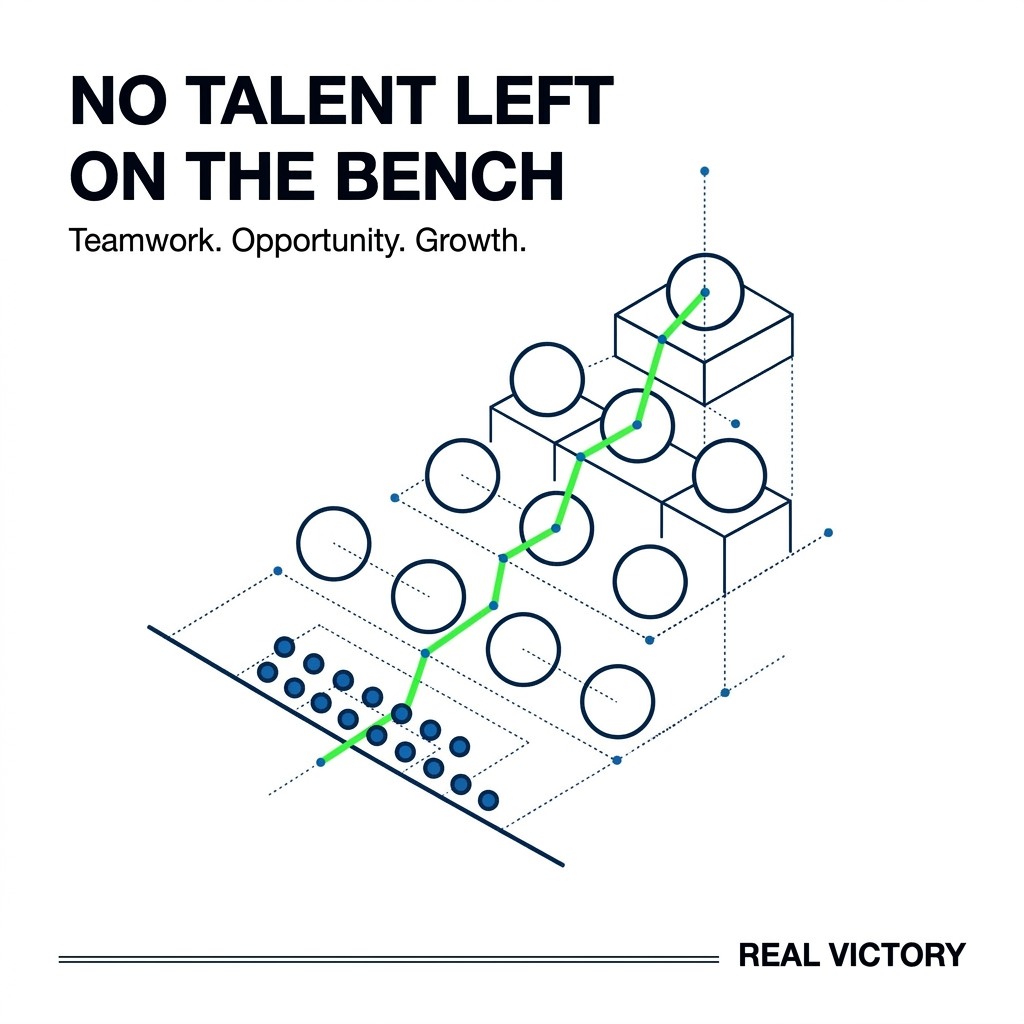
Furthermore, adaptive organizations can quickly pivot to support youth mental health in a crisis or launch digital skills bootcamps when the economy shifts, ensuring no young person is left on the bench.
Unity and Inclusive Youth Identity
The World Cup’s symbolic power to unite diverse populations under a shared banner of national pride is a vivid lesson in social cohesion.
A youth empowerment ecosystem must similarly foster a sense of belonging that bridges ethnic, socioeconomic, and geographic divides.
Fair growth means that a young person in a remote village feels as much a part of the national story as one in the capital city.
Policies and programmes that narrow the urban-rural opportunity gap, in digital access, quality education, sport facilities, and creative outlets, are essential to prevent parallel youth communities with clashing identities and vastly different life chances.
The tournament metaphor also carries a warning: the same unifying event can be manipulated to suppress dissent and deepen inequality.
Youth programmes must therefore be built on genuine inclusion, not tokenism, and must actively dismantle barriers rather than merely celebrating diversity in photo opportunities.
When young people from all backgrounds train together, compete together, and build projects together, they develop the shared identity and mutual trust that form the backbone of a cohesive society.
Bridging the Urban-Rural Opportunity Gap for Youth
Evidence on the urban-rural divide reveals a stark “home advantage.” Urban youth often benefit from denser networks, better infrastructure, and more concentrated investment, creating virtuous cycles of opportunity, while rural youth face an “away disadvantage” born of geographic isolation, limited digital connectivity, and thinner institutional support.
Research on digital government maturity shows that urban local governments achieve higher performance through sustained leadership and inter-agency coordination, whereas semi-rural governments struggle with fragmented governance and limited human capital.
This same pattern plays out in youth services.
Reducing this divide demands a place-sensitive strategy: leadership development for rural youth workers, investment in mobile and digital youth work, and funding models that recognize the higher unit cost of serving dispersed populations.
The goal is not simply to replicate urban programmes in the countryside but to co-design approaches that leverage rural strengths such as community cohesion, connection to nature, and strong intergenerational relationships, then link them to broader networks.
Every talented young athlete in a rural area deserves a path to the national team; every young coder, a chance to join the global digital economy.
Implications for Youth Empowerment Policy and Practice
A championship-winning team is not merely a collection of individual stars; it is a well-coordinated, motivated, and unified system that performs at its peak under pressure.
This truth must reshape how we invest in youth.
Policymakers should adopt a “total team” approach: building leadership pipelines among youth workers, strengthening coordination bodies that span education, health, employment, and sport, and ensuring that funding mechanisms reward collaboration rather than competition among providers.
Practitioners on the front line need the professional autonomy to adapt programmes to local realities, just as coaches adjust tactics to the opposition.
Crucially, young people themselves must be co-owners of this system, not passive beneficiaries but active players, referees, and coaches of their own development.
The ultimate metric of success is whether the system ensures that every young person, whether in a high-rise urban neighbourhoods or a remote rural hamlet, can access the experiences, relationships, and resources that turn potential into performance.
Conclusion
The thrill of a perfectly executed tournament moves, the roar of a unified crowd, the pride of a team that transcends its individual parts: these are not just sports moments; they are templates for fair growth.
Re-angled through youth empowerment, the World Cup metaphor calls for a generation-wide mobilization where communication, enthusiasm, cooperation, and unity are not abstract ideals but operational principles.
By organizing youth development with the same seriousness and joy that we organize the beautiful game, we can build a society where no young person is left watching from the sidelines.
The real trophy is a generation equipped, connected, and inspired to play its part in national development on and off the field.
Reference
Human, L. H., & Van Graan, M. (2013). South African volunteers’ experiences of volunteering at the 2010 FIFA World Cup South Africa. African Journal for Physical, Health Education, Recreation and Dance, 19(2), 345–358.