
Executive Synopsis:
- Career Pathways: UNESCO status is creating tangible jobs through licensed guide programmes, the premium bird’s nest trade, and hospitality roles.
- Youth Employment: With a very low state youth unemployment rate, structured training is key to converting tourism demand into local paychecks.
- The Core Challenge: The opportunity is real, but success depends on ensuring locals, not outsiders, secure the resulting jobs and training.
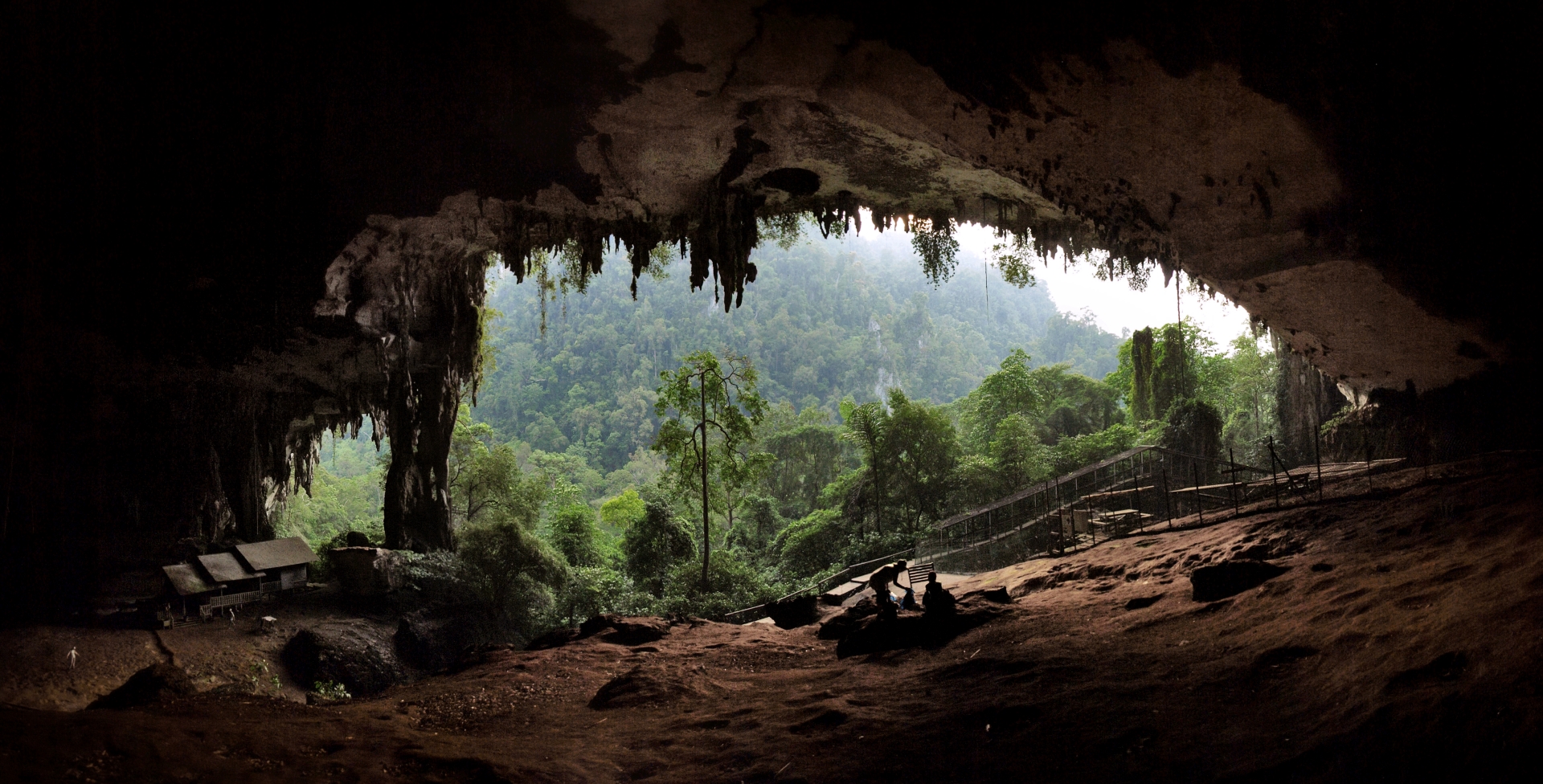
When the UNESCO World Heritage Committee inscribed the Archaeological Heritage of Niah National Park’s Caves Complex in July 2024, it recognised a site with one of the longest continuous records of human life on Earth, evidence of occupation stretching back at least 40,000 years, with some strata suggesting figures closer to 65,000. That recognition made global headlines. Two years on, the more useful question for Sarawak is narrower and more local: can a young person from Batu Niah build a career around that heritage, rather than leaving it for Miri or Kuching to find work?
The answer is increasingly yes, and it is backed by numbers rather than sentiment. Sarawak’s youth unemployment rate stood at 3.1 per cent in the third quarter of 2025, according to the Department of Statistics Malaysia, essentially full employment and well below the national youth (15–24) rate of 10.2 per cent recorded in June 2026. State officials attribute part of that gap to exactly the kind of tourism, conservation and heritage-linked jobs that Niah is now positioned to generate at scale.
Guiding: a licensed, funded, fast-tracked career path
The clearest and most immediate opportunity is becoming a licensed park guide. Sarawak currently has around 400 registered guides but only roughly 260 active ones, and the state government, under its Post-COVID-19 Development Strategy 2030, has set a target of at least 300 active guides by 2030. To close that gap, the Ministry of Tourism, Creative Industry and Performing Arts and Sarawak Forestry Corporation (SFC) are jointly running fully sponsored training courses worth RM3,000 per participant, two-week residential programmes that lead directly to a licence.
These are not abstract slots. At a similar training push in Bako National Park in September 2025, thirty participants, mostly from the surrounding kampung, went through the same guide pipeline now being extended to other Totally Protected Areas, including Niah. SFC’s own Licensed Park Guide Programme frames the initiative explicitly as a human-capital strategy, pairing certified guiding skills with conservation ethics so that local youth, not outside operators, capture the income from rising visitor numbers. The proof that this works shows up in placement data: at Sarawak Youth Week 2025 in Bintulu, 56 of 196 young participants secured on-the-spot job offers, with another 48 advancing to second-round interviews, evidence that structured training converts directly into employment when the demand is there.
And the demand is there. Sarawak drew 4.83 million visitors in 2024, generating RM12.6 billion in receipts, and is targeting 5 million visitors and RM12.73 billion in receipts for 2026, the year Malaysia is running its national Visit Malaysia 2026 campaign with a target of 35.6 million tourists and RM147.1 billion in nationwide receipts. The first quarter of 2026 alone brought 1.24 million visitors to Sarawak, a 4.5 per cent year-on-year rise, with ASEAN and domestic travellers leading the growth. Every one of those visitors who reaches Niah, reachable by road from Miri rather than only by air, needs a guide, a boat operator or a homestay host drawn from Batu Niah itself.
The bird’s-nest trade: an ancestral skill worth more than ever
For young people already connected to families with harvesting rights, the swiftlet nest trade offers a second, higher-value pathway. Malaysia’s edible bird’s-nest industry is now valued at an estimated RM1.5 billion, and exports to China, the industry’s largest market, rose sharply from 201 tonnes in 2023 to 484 tonnes in 2024, with Malaysia securing a renewed export protocol with Chinese authorities in December 2025 to keep that growth going. Separate trade data put Malaysia’s bird’s-nest exports to China at roughly US$142 million between January and November 2025 alone.
Niah’s Great Cave has supplied this trade for at least fifteen centuries, and the harvesting rights held by Batu Niah families predate the national park itself. What UNESCO status adds is a story the current trade has not yet fully monetised: a verifiable, heritage-branded provenance tied to the ancestral principle of molong, take only what is needed, that could support a premium price point well above commodity rates. For the next generation, that means the harvesting skill inherited from parents and grandparents can be paired with something new: branding, traceability and direct-to-buyer sales, work suited to young people who understand both the cave and a smartphone. The Penan community’s growing role co-managing swiftlet conservation at Niah shows this can be built as a genuinely community-led enterprise rather than one dictated by outside buyers.
Homestays, hospitality and the private-sector wave
Batu Niah’s road access, its central structural advantage over the fly-in-only Gunung Mulu National Park, means tourist spending can spread across homestays, food stalls and small guesthouses rather than pooling at a single lodge. That shift is now being actively funded. Putrajaya has set a national target of RM200 million in homestay-sector revenue for 2026 under the Visit Malaysia Year campaign, explicitly framed by the Deputy Prime Minister as a way to open opportunities for the younger generation, and Budget 2026 allocates RM50 million to support artisans and heritage entrepreneurs such as craftspeople and weavers in building income from their traditions.
Sarawak Forestry Corporation has also signed a 20-year concession with Sutera Sanctuary Lodges to upgrade accommodation, dining and recreational facilities at Niah, renovation work that will need local labour to build and, afterwards, local staff to run. Elsewhere in Borneo, Sabah’s 2026 Bangkit programme has already shown what structured, coached entrepreneurship support looks like in practice: thirty homestay operators completed an intensive, multi-phase coaching programme covering business planning, real-world mentoring and industry exposure in eco-tourism, digital content and food and beverage, a model Batu Niah’s youth could adapt directly, since the same three sectors, nature tourism, storytelling, and food, are exactly what the town has to offer.
Conservation, research and the digital frontier
World Heritage status also tends to draw universities, archaeologists and conservation specialists in numbers a merely notable site would not, and every field season is a chance for local hiring in site monitoring, visitor-flow management and collections work at the Niah Archaeology Museum, which received RM395,000 in facility upgrades in 2025 alongside RM1 million for park maintenance. Restoration work following the severe 2025 floods, the worst since 1963, is itself generating short-term construction and trail-building jobs while a 600-metre section linking Traders’ Cave to the Great Cave is rebuilt.
Less obvious, but arguably just as promising, is digital and creative work: heritage content creation, translation and interpretation for the growing number of visitors arriving through Visit Malaysia 2026’s digital-first marketing push, which Tourism Malaysia says will direct 70 per cent of its promotional spend to digital and influencer channels. A young person who can tell Niah’s story on camera, in Mandarin, Malay or English, is now a marketable professional in a campaign the federal government has already put real money behind.
What actually needs to happen
None of this is automatic, and none of it happens through a single ministry statement. The guide-training pipeline needs to reach Batu Niah’s own residents ahead of outside applicants; the bird’s-nest premium needs a credible, honestly-told heritage narrative rather than a marketing gloss; homestay coaching needs to arrive in Batu Niah the way it has already arrived in Sabah; and conservation hiring needs to prioritise local youth over fly-in specialists wherever skills allow. Sarawak has already proven, through five years of dossier-building and diplomatic groundwork, that it can execute a long, technical, multi-agency project. The task now is smaller in scale but harder to fake: making sure a guide’s licence, a harvester’s export contract, a homestay’s first booking and a museum internship all land, specifically, in the hands of Batu Niah’s own young people.
Judged against that standard, the numbers so far are encouraging rather than conclusive: a 3.1 per cent youth unemployment rate, a funded pipeline of 300 guide positions, a RM1.5 billion trade looking for a premium story, and a national campaign spending hundreds of millions of ringgit to bring visitors precisely to places like Niah. The inscription opened the door. Whether a generation of Batu Niah’s youth walks through it, into steady, sustainable income built on their own heritage, is the test the coming years will actually decide.
References
Bernama. (2025, May 15). Sarawak youth unemployment at 3.1 per cent in Q3 2025, labour market stable. The Borneo Post. https://www.theborneopost.com/2026/05/15/ripin-sarawak-youth-unemployment-at-3-1-per-cent-in-q3-2025-labour-market-stable/
Bernama. (2026, March 26). Sarawak Forestry Corporation accelerates restoration at Niah National Park after floods. The Borneo Post. https://www.theborneopost.com/2026/03/26/sarawak-forestry-corporation-accelerates-restoration-at-niah-national-park-after-floods/
Bernama. (2026, May 19). Sarawak records 1.24m visitors in first quarter of 2026. The Malaysian Reserve. https://themalaysianreserve.com/2026/05/19/sarawak-records-1-24m-visitors-in-first-quarter-of-2026/
Department of Statistics Malaysia. (2026). Labour force statistics, June 2026. https://www.dosm.gov.my/portal-main/release-content/labour-force-statistics-june-2026
Ministry of Finance, Malaysia. (2025, October 10). Budget 2026: The people’s budget. Prime Minister’s Department.
Ministry of Tourism, Arts and Culture, Malaysia. (2024, April 30). Tourism Malaysia unveils strategic roadmap for Visit Malaysia 2026. https://www.tourism.gov.my/media/view/tourism-malaysia-unveils-strategic-roadmap-for-visit-malaysia-2026
Ministry of Tourism, Creative Industry and Performing Arts, Sarawak. (2025, September 2). Sarawak targets 300 active park guides under PCDS 2030. The Borneo Post. https://www.theborneopost.com/2025/09/03/sarawak-targets-300-active-park-guides-under-pcds-2030/
Ministry of Tourism, Creative Industry and Performing Arts, Sarawak. (2026, May 19). Sarawak on track for 5 mln visitor arrivals, RM12.7 bln tourism receipts despite geopolitical tensions. The Borneo Post. https://www.theborneopost.com/2026/05/19/sarawak-on-track-for-5-mln-visitor-arrivals-rm12-7-bln-tourism-receipts-despite-geopolitical-tensions/
Newswav. (2025, November 14). Malaysia secures continued bird’s nest exports to China under new protocol. https://newswav.com/article/malaysia-secures-continued-bird-s-nest-exports-to-china-under-new-protocol-A2511_hLcbdA
Newswav. (2025, December 5). Malaysia’s bird’s nest industry gains momentum with China export boost. https://newswav.com/article/malaysia-s-bird-s-nest-industry-gains-momentum-with-china-export-boost-A2512_OF85uP
Premier’s Department, Sarawak. (2025, May 21). SFC, SSL sign concession agreement to elevate Niah & Tanjung Datu National Parks. https://premierdept.sarawak.gov.my/web/subpage/news_view/18310
Sarawak Forestry Corporation. (n.d.). Niah National Park. https://sfc.sarawak.gov.my/web/subpage/webpage_view/62
Sarawak Forestry Corporation. (2019). Fact sheet: Park guide training and licensing system for Sarawak. https://sarawakforestry.com/layout2/wp-content/uploads/2019/08/FACT-SHEET-1.pdf
Sarawak Tourism Board. (2025, May 27). Sarawak records 4.83 million visitor arrivals in 2024. Sarawak Tribune. https://www.sarawaktribune.com/sarawak-records-4-97-million-visitor-arrivals-in-2025/
Sarawak Tourism Board. (2026, May 19). Sarawak records 1.24 million visitors in early 2026. The Sun. https://thesun.my/news/malaysia-news/sarawak-records-1-24-million-visitors-in-early-2026/
The Borneo Post. (2026, April 23). 30 homestay entrepreneurs join Bangkit Sabah 2026 on eco-tourism. https://www.theborneopost.com/2026/04/23/30-homestay-entrepreneurs-join-bangkit-sabah-2026-on-eco-tourism/
Tourism Malaysia. (2024, May 1). Malaysia targets 35.6 million global travelers with new tourism campaign for Visit Malaysia 2026. Travel and Tour World. https://www.travelandtourworld.com/news/article/malaysia-targets-35-6-million-global-travelers-with-new-tourism-campaign-for-visit-malaysia-2026/
Tourism Malaysia. (2025, October 6). Visit Malaysia Year 2026: Govt eyes RM200m boost from homestay sector, says DPM Zahid. Malay Mail. https://www.malaymail.com/news/malaysia/2025/10/06/visit-malaysia-year-2026-govt-eyes-rm200m-boost-from-homestay-sector-says-dpm-zahid/193678
UNESCO World Heritage Centre. (2024, July 27). The Archaeological Heritage of Niah National Park’s Caves Complex. https://whc.unesco.org/en/list/1014/
Yusoff, R. (2025, October 10). More than RM700m for VMY2026 under Budget 2026. The Malaysian Reserve. https://themalaysianreserve.com/2025/10/10/more-than-rm700m-for-vmy2026-under-budget-2026/