

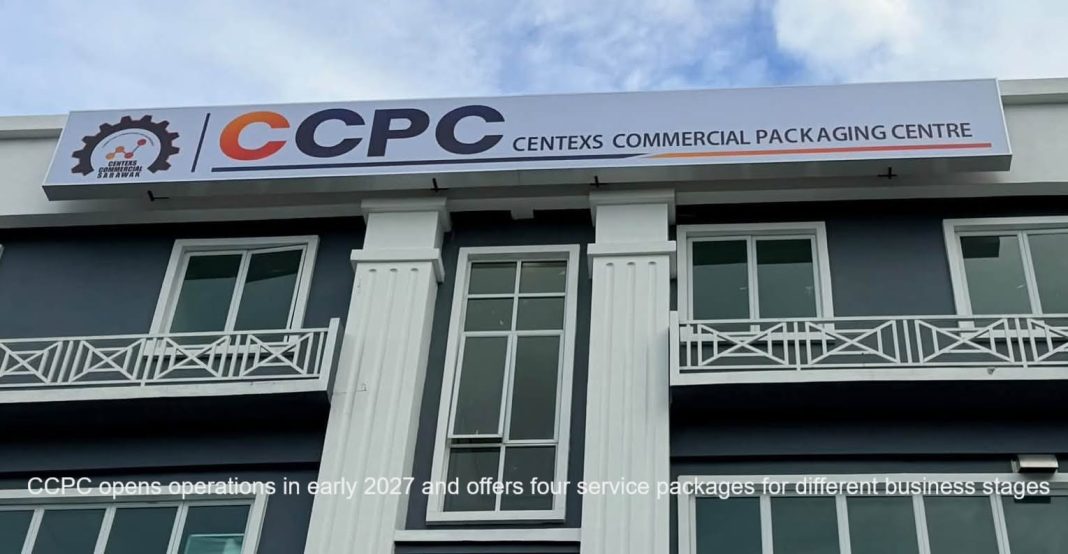
- CENTEXS Commercial Packaging Centre launches in early 2027 to support young Sarawakian food entrepreneurs with affordable shared facilities.
- Malaysia recorded a 10.1 percent youth unemployment rate in August 2026, making structured food processing ventures vital for job creation.
- Shared industrial equipment reduces high initial capital costs, allowing small teams to scale production without taking excessive financial risks.
- The centre provides essential packaging, design, and halal readiness training to help local products meet strict supermarket standards.
- Comprehensive service packages connect budding makers directly to digital platforms, expanding market reach and boosting state economic growth.
Many young Sarawakians dream of turning family recipes into products. Ideas are strong, yet the path to shelves is hard. A small kitchen can make tasty food, but in small volumes. CENTEXS Commercial Packaging Centre (CCPC) aims to close that gap.
Sarawak has crops, spices and flavours that deserve wider markets. Many small producers struggle to reach buyers beyond local towns. Limited space and basic tools keep output low and costs high. Brands stay small even when the product itself is good.
Youth jobless data shows why new business paths matter here. DOSM recorded Malaysia’s youth unemployment at 10.1% in August 2026. Globally, the ILO’s 2025 youth jobless rate was higher, at 12.4%. Sarawak’s overall jobless rate stood near 3.1% in Q3 2025.
Food processing offers young people a business they can build. CCPC should begin operations in the first quarter of 2027. It targets 200 entrepreneurs across Sarawak during its first year. Young makers among them can gain shared space to start.
It brings development, processing, packaging, and marketing in one place. Young entrepreneurs no longer need to chase each service separately. That saves time, often the scarcest thing for new founders. CENTEXS Commercial, set up in 2019, already promotes Sarawak products.
Small firms matter because they carry much of the economy. Small firms contributed 39.7% of Malaysia’s economic output in 2025. In Sarawak, the share is about 18%, state leaders say. Globally, SMEs are about 90% of firms, employing over half.
Many young food makers begin with basic tools in kitchens. Manual work eats time and caps what small teams make. When orders grow, output cannot keep pace with rising demand. A big order can become a risk, not a reward.
CCPC lets founders share costly equipment rather than buy everything. Shared machines include mixing tanks, homogenisation machines and storage tanks. Entrepreneurs still bring their own cooking equipment for specific products. This split keeps shared capital costs manageable for everyone involved.
Halal food is where Malaysia already shows strong export strength. Malaysia’s halal exports reached RM68.52 billion in 2025, up 10.9%. Food and beverages led at RM36.86 billion, a 53.8% share. Worldwide, halal food spending reached about US$1.53 trillion during 2024.
Packaging is where many small food products fail the test. Poor sealing causes spoilage during long journeys to distant buyers. CCPC’s third package covers filling, weighing, sealing, and retort processing. Retort processing helps sauces and meals last longer before export.
Phase one starts with two formats, namely pouches and sachets. Planned pouch capacity stands at 28,000 units per month. Sachet capacity is planned at about 192,000 units every month. Starting small lets the centre grow output alongside real demand.
Sarawak buys much more food than it sells to others. The state’s food trade deficit was RM6.64 billion in 2025. Q1 2026 alone recorded a RM1.63 billion food trade gap. Globally, FAO estimates 13% of food is lost after harvest.
Processing turns raw harvests into goods that last much longer. Lasting goods can travel, wait on shelves, and still sell. Value stays in Sarawak instead of leaving as raw material. Young entrepreneurs who process can earn more from one crop.
Design is another weak point for many rural food makers. Plain clear bags without labels rarely catch a shopper’s eye. CCPC’s first package covers basic packaging design and concept support. A clear label and look help new brands earn trust.
Malaysian export doors are opening, yet foreign competition is intense. Processed food exports to Europe hit RM3.48 billion in 2024. That marked a rise of 70% over the year before. Dubai’s Gulfood 2025 drew over 5,500 exhibitors from 129 countries.
Four service packages let founders buy only what they need. The second package adds printing for firms that produce themselves. The fourth offers full support, from product development to marketing. These tiers help beginners avoid unnecessary capital spending early on.
Big retail chains expect clean, certified, and properly labelled products. Small makers often cannot afford their own certified processing space. CCPC plans training on halal certification and food safety readiness. This support may open supermarket doors that once seemed closed.
Sarawak’s economy also needs more variety beyond its heavy industries. Its output grew 3.6% in 2025, against 5.2% for Malaysia. Manufacturing grew only 0.1% as petroleum and chemical output fell. World growth in 2025 was near 3.5%, the IMF estimates.
New food products need testing before they reach the public. CCPC plans research support, including formal product evaluation and improvement. Partner Polypack brings over fifteen years of packaging industry experience. That experience can shorten trials and reduce costly early mistakes.
Five selected entrepreneurs tested prototypes before the centre fully opened. They used their own funds while awaiting possible financing support. Their products include ready-to-eat meals and frozen items. The pilot lowers launch risk and teaches the centre lessons.
Money is the next big hurdle for most young founders. Since 2021, MINTRED has approved RM220.3 million for over 10,200 MSMEs. Globally, about half of formal SMEs lack formal credit access. Shared facilities reduce the capital that a founder must raise.
Financing of about RM20,000 is proposed to ease development costs. It remains unapproved, so founders should not plan around it. Support may depend on the package that a founder chooses. The final amount could also end up lower than proposed.
Clear eligibility rules will protect public funds and applicant trust. More public financing partners could widen access for more entrepreneurs. Grant paperwork burdens micro firms that have no administrative staff. Simple, coordinated applications would help young founders see things through.
Healthy small firms also create jobs for neighbours and relatives. Malaysian MSMEs employ 8.09 million people, or 48.7% of workers. Sarawak has more than 71,000 registered MSMEs, state officials say. World Bank estimates 600 million jobs are needed by 2030.
A 1,500-unit minimum order may limit very small firms. Young founders should test demand before committing to that volume. The centre should explain the threshold clearly to new applicants. Flexible scheduling could help smaller firms use shared capacity better.
Packaging materials are another cost that small firms feel strongly. Many owners import empty bottles and boxes, facing long waits. Group buying can cut those costs and lift profit margins. A shared centre gives young makers a base for cooperation.
Staying open is often harder than simply starting a business. Of Malaysian firms founded in 2020, 72.5% survived five years. Sarawak officials put the state’s MSME survival rate at 77.3%. In America, roughly half of new firms last five years.
Skills matter as much as machines in modern food making. Wrapping and sealing machines need trained hands and steady care. Poor training raises waste, and rural sites face power drops. A shared centre with trained staff can ease both problems.
Raw harvests change with the weather, which makes supply uneven. Big buyers want steady volumes all year, not occasional batches. Shared facilities let several brands pack safely under one roof. Founders must still plan their own raw material supply carefully.
Low unemployment does not always mean good jobs for graduates. Malaysia’s August 2026 jobless rate was 2.9%, against 4.9% globally. Sarawak recorded 3.0% for 2025, the state labour department says. Yet DOSM reports 35.2% skill-related underemployment in the second quarter.
Making a good product is only half of the job. Selling needs customers, so CCPC should link packaging with sales. TikTok Shop programme shows a clear route to digital markets. Digital marketing training can support sales after packaging support ends.
Uptake is the real test, since 200 participants is ambitious. High capacity needs steady use to cover its fixed costs. The centre should therefore track enquiries, sign-ups and repeat orders. Young founders can help by arriving with a clear product.
Halal demand is expected to keep growing for years ahead. Malaysia aims for RM80 billion in halal exports by 2030. Sarawak already has over 1,100 halal-certified entities, says the HDC. Globally, halal food spending may pass US$2 trillion by 2029.
Halal certification can open a second door beyond finished foods. One Sarawak pepper brand with halal certification already sells overseas. Young founders can copy that method with their own products. Halal ingredients added RM21.39 billion to Malaysia’s 2025 halal exports.
Convenience foods suit busy households, and they need good packaging. Pilot categories already include ready-to-eat and frozen foods. Retort processing can turn local sauces into longer-lasting products. These travel better and suit supermarkets, airports and online shops.
Online selling is now a normal route to many customers. E-commerce added RM267.6 billion, or 13.2% of Malaysia’s 2025 economy. Sarawak targets 30,000 local MSMEs for digital adoption by 2030. UNCTAD puts online retail at 25-30% in China and Korea.
Packaged food fits the wider push for Sarawak heritage products. CENTEXS Commercial plans a KLIA presence under Sense of Malaysia. A 2024 Batik Air MoU aims to promote Sarawak products. Well-packaged products may find a place in such channels.
Export markets want longer shelf life and strict label details. Testing sites are often too far for shelf-life checks. Evaluation and retort processing at CCPC can shorten that road. Export is a later goal, yet early habits shape it.
Good packaging and processing can also help reduce food waste. Malaysians waste about 81 kilograms of food per person yearly. The global average is 79 kilograms, according to the UNEP. Food loss and waste create 8-10% of global greenhouse gas emissions.
Products that stay fresh longer need fewer rushed discount sales. Seasonal local produce can become sauces, snacks, or ready meals. That gives farmers nearby another outlet when harvests run high. Young entrepreneurs can link farms and shoppers through better processing.
Spillover benefits can reach beyond the person using the machines. A food business hiring even two people helps its community. Farmers, printers, drivers, and shop owners may all gain work. Each success story can also encourage another young person nearby.
Young Malaysians outside work and study need clearer, practical pathways. Globally, 20% of youth are outside work, school or training. In June 2026, ages 15 to 30 recorded 6.3% unemployment. Entrepreneurship offers one path, if training and facilities come together.
Skills picked up at CCPC can outlast any single product. Founders can learn labelling rules, food safety and quality habits. These skills can carry over to catering, retail and distribution. Even a founder who changes course keeps useful know-how.
Honest planning also means naming the risks founders may face. Shared equipment creates fixed costs, even when demand stays low. Clear price tiers and written partner duties should protect quality. Poor early service could damage local trust and slow adoption.
Sarawak’s wider economy gives young food entrepreneurs a stronger platform. Investments of RM116.8 billion were attracted between 2021 and 2025. Trade hit RM179 billion in 2025, a RM59 billion surplus. IMF expects world growth to slow to 3.1% this year.
Phase two plans bottle and tray packaging for later growth. These formats may suit sauces, ready meals and fresh products. Expansion should follow proven demand and reliable phase one performance. Buying equipment too early could raise significant unused capacity costs.
A young entrepreneur can prepare well before the doors open. Picking one product and testing small batches is sound planning. Matching it to the right package keeps early spending low. Checking financing rules and halal needs early avoids costly surprises.
The case for early action grows clearer in the numbers. The ILO projects global youth unemployment near 12.3% through 2027. Malaysia’s 10.1% youth rate sits well above the 2.9% overall. Sarawak’s near 3.0% rate shows jobs exist, yet quality matters.
CCPC fits a wider Sarawak push to strengthen local food. Sarawak aims to become a net food exporter by 2030. A Sarawak Halal Industry Development Plan covers 2026 to 2030. CCPC offers young founders a practical way to join in.
CCPC is no magic answer, yet it eases real obstacles. Shared machines, packaging support, and training can lower starting costs. Gains in halal skills, digital sales and jobs may follow. Success still depends on uptake, service quality, and cost discipline.