
- UN World Youth Report 2025 highlights global youth mental health crisis, with 75 per cent of adult conditions beginning by mid-twenties.
- Malaysia records ASEAN’s highest age-standardised mental health prevalence at 13.2 per cent (all ages), with a rising burden since 1990.
- Social determinants include education, employment, family, poverty, technology and community, all shaping young Malaysians’ mental well-being.
- Malaysia’s response includes education reforms, psychological first aid, Safe School 2.0, Talian HEAL 15555 and MyMinda self-screening.
- UN report urges integrated policy, school mental health promotion, poverty reduction, digital literacy and stigma reduction across all sectors.
The United Nations World Youth Report 2025 shines a spotlight on a global crisis that is quietly unfolding among young people. Titled Youth Mental Health and Well-being, the report draws on 2,578 validated survey responses from young people aged 15 to 29 across 137 countries, along with 148 focus-group participants, nine in-depth interviews and expert consultations, to paint a detailed picture of the mental health challenges facing today’s youth (United Nations Department of Economic and Social Affairs [UN DESA], 2025). The survey was voluntary and conducted online, and 71 per cent of respondents were female, so its findings illustrate young people’s experiences rather than represent all youth. For readers in Asia and especially in Malaysia, the findings are both urgent and deeply relevant.
The Global Picture and Why Asia Matters
According to the World Health Organization (2024), an estimated one in seven young people between the ages of 10 and 19 is experiencing a mental health condition. What is particularly striking is that 75 per cent of all mental health conditions adults experience were already present by their mid-twenties. This means that the teenage years and early adulthood are a critical window for intervention.
In Asia, the situation is complex. A recent working paper examining nine Asian economies, including Bangladesh, Hong Kong, India, Indonesia, Japan, Pakistan, the Philippines, Singapore and Sri Lanka, highlighted significant variations in youth mental health across the region. While some young people report relatively high levels of well-being, others face substantial challenges linked to poverty, inequality and limited access to support services.
Malaysia stands out in this regional context. According to the Orygen Global Policy Lab report (2025), which draws on the Global Burden of Disease Study 2021, mental disorders were among the top five leading causes of disease burden in Malaysia in 2021, accounting for 6.7 per cent of total Disability-Adjusted Life Years (DALYs). These figures cover all age groups, not only young people. More concerning is the trend: from 1990 to 2021, Malaysia recorded a notable increase of 12.6 per cent in the age-standardised prevalence of mental health conditions. Across the ASEAN region, Malaysia had the highest age-standardised prevalence at 13.2 per cent in 2021.
Understanding the Social Determinants of Youth Mental Health
The UN report is built around the idea that mental health is shaped not just by individual factors but by the conditions in which young people live, learn, work and grow. It identifies six interlinked social determinants: education, employment, family and relationships, poverty and deprivation, technology and the online environment, and society and community.
Education: A Double-Edged Sword
Schools should be places where young people feel safe and supported. Yet the report reveals that many educational environments fall short. In Malaysia, the education system is taking steps to address this. The Ministry of Education has implemented five immediate reform measures, with mental health as a key component. These reforms include strengthening support systems for counsellors, teachers and students, and enhancing collaboration with the Health Ministry.
However, significant challenges remain. A study conducted by Universiti Kebangsaan Malaysia found that only 33 per cent of students screened had mental health within the normal range, meaning the majority were suffering in silence. The report notes that when young people do seek help, they often face long waiting lists, high costs and a lack of confidentiality. In Malaysia, the Healthy Mind Screening programme has been doubled to twice a year to enable early detection of students showing signs of depression or those requiring further support.
The pressure to perform academically is a major stressor for young people across Asia. In Malaysia, the competitive education system often places immense pressure on students, and the fear of falling behind peers can have a devastating impact on mental well-being.
Employment: The Struggle for Decent Work
For young people in Asia, the transition from education to employment is fraught with difficulty. The report highlights that youth unemployment is a global concern, with young people almost three times more likely than adults to be unemployed. In Asia, this challenge is compounded by the rise of informal and precarious work, particularly in countries like Malaysia, Indonesia and the Philippines.
The emotional toll of unemployment is severe. One young person from a focus group in the report described it plainly: “Unemployment leaves the person hopeless about the future and what the future holds”. Research from Vietnam found that job loss was associated with a 5.9 percentage point rise in the probability of experiencing symptoms of mild or severe anxiety, although not of depression. In Malaysia, the gig economy has expanded rapidly, offering flexibility but often at the cost of job security, fair wages and access to benefits. For young Malaysians entering the workforce, these conditions can trigger anxiety and depression.
Family and Relationships: The Foundation of Well-being
Family dynamics play a pivotal role in shaping youth mental health. The UN report found that 30 per cent of young people never talk about their problems with their parents or carers. In Asian cultures, where family expectations and obligations are often deeply felt, this silence can be particularly pronounced.
In Malaysia, cultural norms around mental health can create barriers to seeking help. Many young people report that their parents do not understand mental health issues, viewing them as a Western concept or a sign of weakness. The report emphasises that parental warmth, monitoring and autonomy granting are linked to lower levels of anxiety and depression, while hostility and psychological control increase mental health risks. Programmes that encourage intergenerational communication about mental health are therefore essential.
Poverty and Deprivation: The Hidden Burden
Poverty and deprivation have a profound impact on youth mental health. The report notes that approximately one billion children globally lack basic necessities such as nutrition or clean water. In Malaysia, while absolute poverty has declined, relative poverty and inequality remain significant concerns.
Malaysian adolescents from lower-income families face higher rates of depression and anxiety. A study of school-going adolescents in Malaysia found that those from families with lower socioeconomic status were more likely to experience depressive symptoms. The stress of financial insecurity, combined with limited access to mental health services, creates a cycle of disadvantage that is difficult to break. The MyHeRo trial, which tests a school-based programme for adolescents at risk of anxiety and depression in economically deprived communities, reflects this concern.
Technology and the Online Environment: A New Frontier
Digital technology has transformed the lives of young people. While it offers opportunities for connection and learning, it also introduces new risks. The UN report found that close to half of young people feel that their self-worth depends on what others think of them online.
In Malaysia, a cross-sectional study of 384 adolescents aged 13 to 21 in Johor and Sarawak found that 72.0 per cent recorded high levels of social media addiction and 33.0 per cent recorded high levels of depression, with a significant but weak positive relationship between the two. Cyberbullying is another serious concern, with victims often feeling they have no escape from their tormentors.
Society and Community: Stigma and Discrimination
Stigma remains one of the most significant barriers to mental health support in Asia. The UN report highlights that stigma and discrimination against individuals with mental health conditions exacerbate negative outcomes and limit access to care. In Malaysia, mental health is still a taboo topic in many communities. A young person from the report’s focus groups explained: “Mental health issues were stigmatised for such a long time in my region; most young people here don’t open up to their families”.
Gender inequality, discrimination based on ethnicity or religion, and the pressures of conforming to rigid social norms all contribute to poor mental health among Asian youth. In Malaysia, young women often face additional pressures related to academic achievement and family expectations, while young men may struggle with societal expectations to be strong and self-reliant.
Malaysia’s Response: Policy and Progress
Malaysia is taking steps to address these challenges. On 28 and 29 June 2025, the Ministry of Youth and Sports organised the ASEAN Youth Mental Health Roundtable Discussion in Kota Kinabalu with the theme “ASEAN Youth Voice: Empowering Minds, Ensuring Well-being.” This event brought together 135 participants from ASEAN member states and Timor-Leste to develop collaborative solutions.
The Ministry of Education has introduced psychological first aid training for teachers, recognising that teachers are often the first point of contact for students in distress. The Safe School 2.0 proposal includes a National School Mental Wellbeing Policy designed to ensure that programmes related to mental and psychological safety are implemented in a structured and integrated manner.
Access to support services is also improving. Talian HEAL 15555, the national mental health helpline, has seen a dramatic increase in calls. In 2025, close to 91,000 calls were received, a twofold increase from the 42,990 calls in 2024, and cumulative calls had passed 230,000 by July 2026. Calls from adolescents aged 10 to 19 rose from 632 in 2023 to 1,290 in 2024 and 2,729 in 2025, indicating that young people are increasingly willing to seek help. The Health Ministry has also launched the MyMinda self-screening module through the MySejahtera application in October 2023, making it easier for young people to check their mental health status.
What Needs to Happen Next
The UN report offers several policy recommendations that are particularly relevant for Malaysia and the wider Asian region.
First, mental health must be integrated into all aspects of policymaking. This means considering the mental health impacts of policies related to education, employment, housing and social welfare. It also means ensuring that mental health services are adequately funded and accessible to all young people, regardless of their background.
Second, schools should be at the forefront of mental health promotion. This includes implementing social-emotional learning programmes, training teachers to identify signs of distress, and creating safe and supportive environments where students feel comfortable seeking help. The report emphasises that young people should be engaged as co-creators of school mental health programmes.
Third, efforts to reduce poverty and inequality must include a mental health component. Cash transfer programmes, universal health coverage and access to affordable housing are all important steps. In Malaysia, expanding access to mental health services in rural areas and for marginalised communities is particularly urgent.
Fourth, digital literacy must be promoted alongside digital access. Young people need to know how to navigate online environments safely, protect their personal data, and balance their online and offline lives. Technology companies also have a responsibility to build in monitoring and support mechanisms to guard against bullying and harassment.
Finally, stigma must be tackled head-on. This requires community awareness campaigns, open conversations about mental health, and improved visibility of people with lived experience of mental health conditions. The report notes that when young people see others like themselves speaking openly about mental health, it becomes easier for them to seek help.
A Shared Responsibility
The mental health of young people in Asia and Malaysia is not just a health issue; it is a social and economic issue. When young people struggle with their mental health, their education suffers, their employment prospects diminish, and their ability to contribute to society is limited.
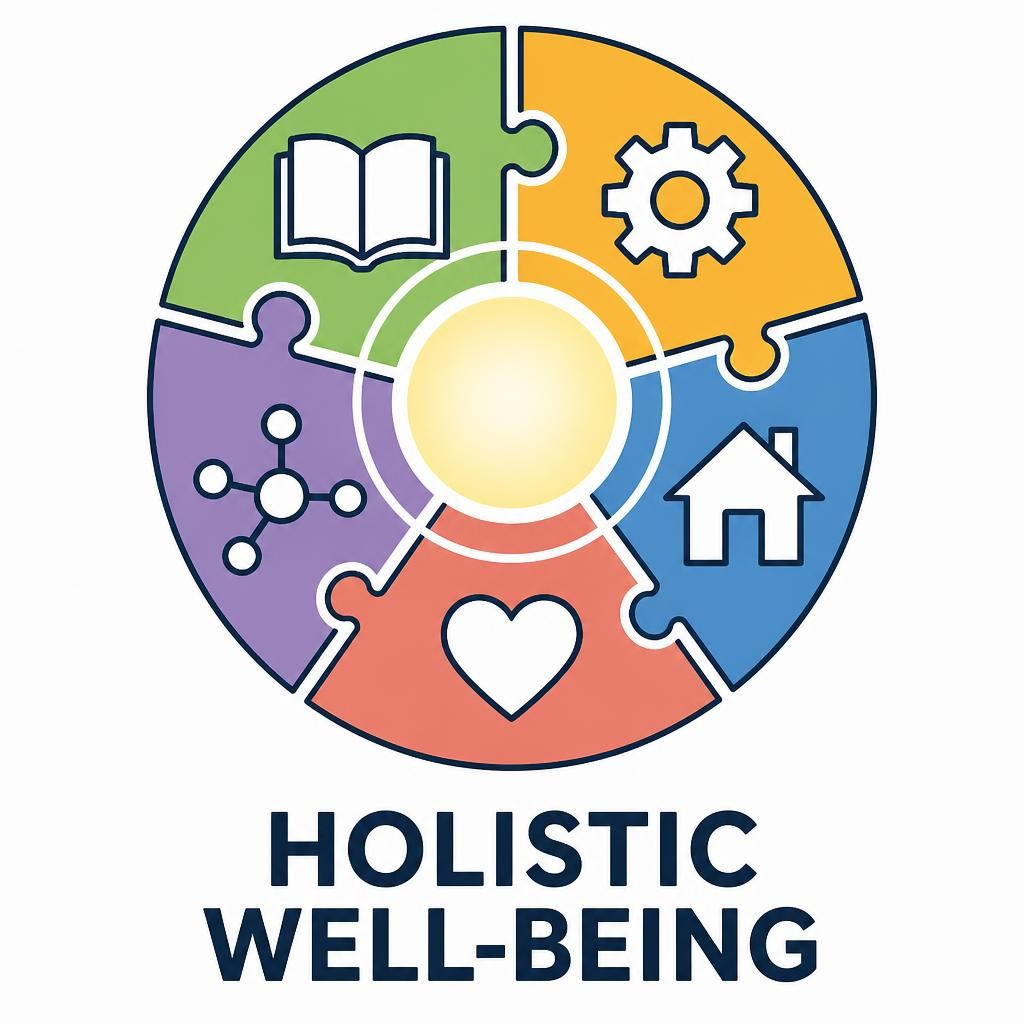
The UN World Youth Report 2025 makes it clear that there is no single solution. What is needed is a holistic, multisectoral approach that addresses the social determinants of mental health. This means governments, schools, families, communities and young people themselves working together.
In Malaysia, the policy window is open. The renewal of the National Strategic Plan for Mental Health and the development of a National Plan of Action for Children and Adolescent Mental Health provide opportunities to build a more inclusive and supportive system. But policies alone are not enough. What is needed is a shift in culture, a willingness to talk openly about mental health, and a commitment to ensuring that no young person is left behind.
The young people who contributed to the UN report have made their priorities clear. They want education, poverty reduction, family support, employment opportunities, community awareness and safe digital environments to be addressed. These are not unreasonable demands. They are the foundations of a healthy and productive life. It is time to listen, and it is time to act.
References
Bernama. (2025a, June 29). Two-day discussion on ASEAN youth mental health draws 135 participants. https://www.bernama.com/en/news.php?id=2439327
Bernama. (2025b, October 16). MOE implements five immediate education reform measures to ensure safer schools. https://www.bernama.com/en/news.php?id=2479442
Bernama. (2026, January 6). Talian HEAL terima 163,709 panggilan dalam tempoh tiga tahun. RTM Berita. https://berita.rtm.gov.my/nasional/senarai-berita-nasional/senarai-artikel/talian-heal-terima-163709-panggilan-dalam-tempoh-tiga-tahun/
Blanchflower, D. G., & Bryson, A. (2025). The mental health of the young in Asia and the Middle East: The importance of self-reports. Quality & Quantity. Advance online publication.
Dewan Masyarakat. (2025, November 5). KPM dan KKM laksana Saringan Minda Sihat bagi mengesan murid berisiko kesihatan mental. https://dewanmasyarakat.jendeladbp.my/2025/11/05/33173/
Essau, C. A., Zakaria, S., Ting, C. H., Lee, J. A. C., de la Torre-Luque, A., Ng, A. L. O., Majid, H. A., Dodd, H., Nik Farid, N. D., Muhammad, N. A., & Wahab, S. (2026). Promoting mental health among at-risk adolescents in Malaysia (MyHeRo): Study protocol for a cluster randomised controlled trial to evaluate the effectiveness and cost-effectiveness of a school-based intervention compared with study skills condition for adolescents identified as at risk for anxiety and depression. Trials, 27(1), 160. https://doi.org/10.1186/s13063-025-09368-7
GBD 2021 ASEAN Mental Disorders Collaborators. (2025). The epidemiology and burden of ten mental disorders in countries of the Association of Southeast Asian Nations (ASEAN), 1990–2021: Findings from the Global Burden of Disease Study 2021. The Lancet Public Health, 10(6), e480–e491. https://doi.org/10.1016/S2468-2667(25)00098-2
Kementerian Kesihatan Malaysia. (2024). Laporan Tahunan 2023 [Annual Report 2023]. https://www.moh.gov.my/images/04-penerbitan/laporan-tahunan/MOH_ANNUAL_REPORT_2023.pdf
Ministry of Health Malaysia. (2020). National Strategic Plan for Mental Health 2020–2025. https://www.infosihat.gov.my/penerbitan-multimedia/garis-panduan/item/national-strategic-plan-for-mental-health-2020-2025.html
Orygen Global. (2025). Supporting youth mental health in Malaysia: Policy Lab. Orygen. https://www.orygen.org.au/Policy-Centre/Policy-Labs-(1)/Supporting-youth-mental-health-in-Malaysia-(1)
Scott, D., Freund, R., Favara, M., et al. (2025). Under pressure: Assessing the relationship between job loss and mental health of young adults in Vietnam. Social Science & Medicine, 375, 118073. https://doi.org/10.1016/j.socscimed.2025.118073
Sinar Daily. (2025, October 17). Majority of Malaysian students ‘suffering in silence’ with mental health issues. https://www.sinardaily.my/article/731038
The Star. (2025, October 17). Safe School 2.0 proposal to be submitted to Education Ministry early November. https://www.thestar.com.my/news/nation/2025/10/17/safe-school-20-proposal-to-be-submitted-to-education-ministry-early-nov
The Star. (2026, July 9). Malaysia’s mental health helpline received more than 230,000 calls since launch, says Health Ministry. https://www.thestar.com.my/news/nation/2026/07/09/malaysias-mental-health-helpline-received-more-than-230000-calls-since-launch-says-health-ministry
UNESCAP. (2022). The Workforce We Need: Social Outlook for Asia and the Pacific. United Nations Economic and Social Commission for Asia and the Pacific. https://www.unescap.org/sites/default/d8files/knowledge-products/Social-Outlook-2022.pdf
UNICEF. (2023). Child Poverty and Deprivation: Global and Regional Estimates. United Nations Children’s Fund.
United Nations Department of Economic and Social Affairs. (2025). World youth report: Youth mental health and well-being (Sales No. E.25.IV.2). United Nations. https://desapublications.un.org/file/21591/download
Victor, S. A., Ibrahim, M. S., Yusuf, S., Mahmud, N., Bahari, K. A., Loh, Y. L., & Abd Mubin, N. N. (2024). Social media addiction and depression among adolescents in two Malaysian states. International Journal of Adolescence and Youth, 29(1). https://doi.org/10.1080/02673843.2023.2292055
World Health Organization. (2024, October 10). Mental health of adolescents [Fact sheet]. https://www.who.int/news-room/fact-sheets/detail/adolescent-mental-health