
Sarawak is changing, and it is changing faster than most of us realise.
As young Sarawakians, we are used to hearing about digital revolutions, the green economy, and the rise of new industries, but one of the most profound transformations of our time is unfolding quietly in our own families and communities.
Our beloved Sarawak is on track to become an “ageing state” as early as 2028, two years ahead of the national projection.
Already, 14 per cent of our population is aged 60 and above, a figure markedly higher than the national average of 12 per cent.
In some districts like Lubok Antu, one in every six residents is a senior citizen.
This is not a distant worry for policymakers in Kuching; it is the reality of our grandparents in longhouses, our elderly neighbours in urban flats, and the aunties and uncles who once carried us on their shoulders.
For many young people, the phrase “ageing society” may summon images of frailty, dependency, and economic burden.
But Premier Sarawak Datuk Patinggi Tan Sri (Dr) Abang Haji Abdul Rahman Zohari bin Tun Datuk Abang Haji Openg has given us a different lens.
At the Sarawak International Conference on Ageing 2025, he declared that the rising number of older persons is “a sign of progress” that must come with “quality of life, dignity, and inclusion.”
He envisions a Sarawak where “every older person must continue to be respected, protected, and included as an integral part of the social and economic fabric of our State.”
His long-term aspiration, woven into the Post-COVID-19 Development Strategy 2030, is to create “a thriving society that is economically strong, socially inclusive, and deeply caring.”
He even believes Sarawak can become a “model for an age-friendly region.”
These are not just beautifully crafted words.
They are an intergenerational invitation extended directly to us, the youth of Sarawak.
The Premier’s vision cannot be achieved by government programmes alone.
It requires the energy, creativity, and compassion of a new generation ready to see longevity not as a crisis, but as an opportunity to weave stronger social ties, innovate in care, and demonstrate a uniquely Sarawakian brand of kindness.
If we answer this call with authenticity and initiative, we will not only honour our elders but also build a more resilient, inclusive, and sustainable future for ourselves.
The demographic data is sobering precisely because it is so personal.
Sarawak’s annual birth rate has sharply declined from 2.76 babies per couple in 2001 to 1.69 in 2023, while the number of newborns has halved.
Combined with rising life expectancy, this twin trend is shrinking our working-age population and expanding the generation of dependent elders.
By 2030, the old-age dependency ratio for those aged 65 and over in Malaysia has already climbed to 11.4, and Sarawak’s figure is accelerating faster.
The Malaysian Employers Federation warns that if poorly managed, an ageing population could strain the labour market, healthcare financing, and social security systems.
Yet within this challenge lies a powerful motivating force for youth.
We will be the ones entering the workforce, paying taxes, and designing the social safety nets that must adapt.
Our future economic productivity and fiscal sustainability are directly linked to how well we integrate and support our ageing community today.
This is where the global framework of the Sustainable Development Goals becomes our compass.
SDG 3 calls for good health and well-being for all at all ages, directly urging us to strengthen geriatric care and mental health services for older persons.
SDG 10 demands we reduce inequalities, which in Sarawak means bridging the chasm between urban and rural elderly care, ensuring that a grandparent in Kapit receives the same dignity and access as one in Kuching.
SDG 11 asks us to make our cities and communities inclusive, safe, resilient, and sustainable, a direct mandate to accelerate Kuching’s progress as a World Health Organization Age-Friendly City and to replicate that success across Sibu, Miri, Bintulu, and beyond.
Even SDG 17, which focuses on partnerships, reminds us that government, private sector, civil society, and youth must collaborate to achieve these goals.
Parallel to the SDGs, the Environmental, Social, and Governance principles that increasingly guide investment decisions also shine a spotlight on social sustainability.
The “S” in ESG demands that we build age-friendly workplaces, champion equitable treatment of older workers, and create inclusive social protection systems.
Sarawak has committed to embedding ESG into its economic policies under PCDS 2030, yet there is limited evidence that ageing-specific social indicators are being measured and disclosed to attract socially responsible investment.
As young future leaders, entrepreneurs, and investors, we can push for an ESG-aligned Sarawak where caring for the elderly is not just a moral value but a recognised metric of a healthy, investable society.
We can advocate for a Sarawak Ageing Index that tracks elderly employment rates, healthcare access equity, and financial security, making our state a magnet for capital that cares.
At the heart of the Premier’s vision is the conviction that older Sarawakians are not passive recipients of aid but active contributors to our social and economic life.
Senior workers bring invaluable experience, loyalty, and soft skills to the workplace.
Integrating them requires flexible work arrangements, ergonomic adjustments, and lifelong learning programmes.
As digital natives, we have a pivotal role to play here.
The rapid push for online welfare assistance, such as the virtual Kenyalang Gold Card on the SarawakPass platform and the 100 per cent online applications for selected schemes, has unintentionally excluded seniors without smartphones or digital literacy.
Critics have highlighted heartbreaking cases of bedridden elders unable to pass facial recognition verification or low-income seniors forced to buy devices just to access aid.
This is not a faceless policy flaw; it is a test of our generation’s empathy and problem-solving skills.
We can bridge this digital divide person by person.
Through the state’s network of 29 Pusat Aktiviti Warga Emas and 8 Pusat Perkhidmatan Warga Emas, youth volunteers can conduct peer-to-peer digital literacy workshops, teaching seniors how to use SarawakPass, make video calls to distant children, and spot online scams.
We can become community digital ambassadors, transforming these activity centres into vibrant hubs where technology is demystified with patience and respect.
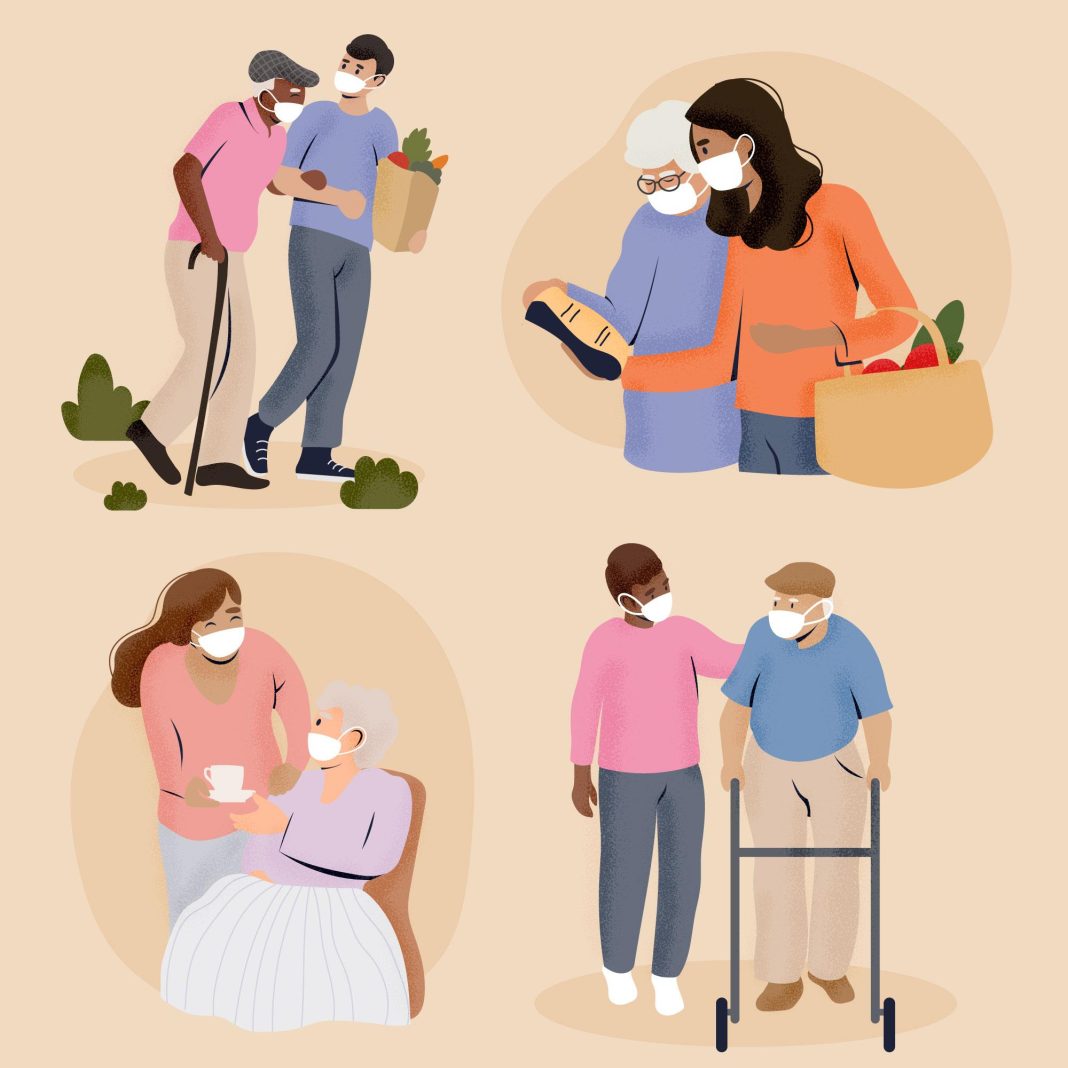
Such intergenerational mentoring does more than impart skills; it nurtures bonds that dissolve ageist stereotypes.
When a teenager shows a seventy-year-old how to access the Senior Citizen Health Benefit on a tablet, both lives are enriched.
The government has laid a foundation that we can build upon.
The Kenyalang Gold Card, with over 342,000 physical cardholders and a network of more than 1,140 strategic partners, provides discounts and a Death Compassionate Assistance of RM1,800.
The Senior Citizen Health Benefit, a RM50 million scheme offering up to RM500 in annual outpatient treatment at over 290 panel clinics, has already served more than 156,000 seniors.
The Home Assistance Service, powered by 250 volunteers, has reached 665 elderly individuals.
These are not abstract figures; they represent real neighbours and relatives whose lives are made easier.
Yet coverage gaps persist, particularly in rural areas where 42.5 per cent of our population lives.
Transportation barriers mean many elders cannot reach clinics or activity centres.
The MyHOeME programme in Kapit, a collaborative effort involving UiTM, the Ministry of Health, and WHO, demonstrated a beautiful model of bringing occupational engagement directly to a longhouse setting, but it remains limited to one community.
This is where our youthful energy can be a force multiplier.
We can join or initiate mobile geriatric outreach teams, combining our willingness to travel with the skills we can learn.
The Centre of Technical Excellence in Dalat has now been designated as Sarawak’s first training centre offering the Malaysian Skills Certificate Level 3 in elderly and palliative care, with its first intake in late 2025.
This is a clarion call for young Sarawakians to consider careers in geriatric care, not as a fallback, but as a high-demand, deeply purposeful profession.
The 13th Malaysia Plan targets 50,000 skilled caregivers by 2030, and Sarawak’s own need for nurses in critical and geriatric care is acute.
By enrolling in these programmes, we can secure our own futures while answering a societal need.
The proposal for a Time Bank, championed by Dato Sri Hajah Fatimah Abdullah, the Minister of Women, Early Childhood and Community Wellbeing Development, is a particularly exciting arena for youth initiative.
Modelled on overseas practices, this system would allow individuals to contribute hours caring for the elderly and earn social credits redeemable when they themselves require care in the future.
As young people, we have time and physical stamina to spare.
By volunteering in a Time Bank pilot, whether in urban Kuching, semi-urban Sibu, or rural Kapit, we can become early adopters of a community-driven care ecosystem that embodies the values of nurturing and mutual support.
It is a tangible way to practice “advocacy” by recognising caregiving as a societal asset and “kindness” by directly improving an elder’s day.
Mental health is another frontier where youthful advocacy can save lives.
Many Sarawakians mistakenly believe that cognitive decline, such as dementia, is a normal part of ageing.
The Alzheimer’s Disease Foundation Malaysia has initiated train-the-trainer programmes in Kuching, Sibu, Bintulu, and Miri, to certify 128 trainers and benefit 1,600 caregivers annually by 2026.
Yet these efforts need to be amplified.
Young people can spearhead awareness campaigns on social media and in communities, using culturally resonant messaging in Bahasa Malaysia, Iban, Bidayuh, and other local languages to combat misconceptions and encourage families to seek early intervention at government memory clinics.
We can be the generation that ends the stigma around elderly mental health, ensuring that our grandparents’ generation experiences not just longer life, but a better quality of life.
Intergenerational solidarity, a cornerstone of Sarawak’s communal ethos, is both a value to be preserved and a strategy to be deployed.
Deputy Health Minister Datuk Hanifah Hajar Taib stressed that intergenerational solidarity is vital to ensure the elderly receive the care, respect, and attention they deserve.
Premier Sarawak Datuk Patinggi Tan Sri (Dr) Abang Haji Abdul Rahman Zohari himself has called for our elders to be seen as integral to the fabric of our state.
Schools can adopt a PAWE or PPWE centre, establishing regular exchange programmes where students document oral histories, preserving the rich tapestry of Sarawak’s cultural heritage before it is lost, while seniors learn digital skills from their young mentors.
Such initiatives nurture authentic relationships that transcend age, enriching education and community life simultaneously.
They also anchor the SDG 11 vision of sustainable cities and communities that truly leave no one behind.
Our advocacy must also demand systemic accountability.
The Premier’s aspiration must be matched by measurable outcomes.
A dedicated Sarawak Ageing Blueprint, harmonised with the federal National Ageing Blueprint 2025–2045 but tailored to our unique rural and multicultural context, is urgently needed.
As young voters, professionals, and civil society members, we can push for this blueprint to contain legally binding targets, dedicated budgets, and an independent monitoring mechanism that includes the voices of older persons themselves.
We can call for the creation of an independent Office of the Commissioner for Older Persons in Sarawak to investigate complaints and ensure that benefits like the Senior Citizen Health Benefit are safeguarded from fraud through secure verification systems, so that public funds reach our grandparents instead of being siphoned away.
The federal government’s allocation of RM1.26 billion for senior citizen welfare in Budget 2026, including a monthly cash assistance of RM600 for nearly 150,000 seniors nationwide, demonstrates a growing commitment.
The 13th Malaysia Plan, for the first time, recognises long-term care as a national strategy, setting targets for a 38 per cent workforce participation rate for those aged 60 to 64 and the development of three new commercialised medical gadgets for the elderly.
The forthcoming Senior Citizens Bill aims to protect rights and well-being through legal provisions.
These policy structures are necessary, but they will remain hollow without community ownership.
That ownership starts with us.
In a world where ESG considerations increasingly dictate capital flows, our generation’s demand for a socially sustainable Sarawak can reshape the economy.
By insisting on transparent reporting on age-friendly metrics, supporting businesses that employ and retain older workers, and patronising services that are accessible to all, we send a powerful market signal.
The Sarawak government, under the Premier’s leadership, is positioning the state as a potential hub for green and socially responsible investment.
A youth-led movement that makes ageing inclusion a visible, celebrated part of our identity can differentiate Sarawak as a place where human dignity drives development.
The Premier’s words ring as both a promise and a test: “We want Sarawak to be a place where people not only live longer, but they also live better.” This is not a passive wish to be fulfilled by a distant administration; it is a challenge directed at every young Sarawakian.
The demographic turning point is not a catastrophe.
Japan, with its super-aged society and long-term care insurance system established in 2000, and Singapore, now a “super-aged” nation with 21 per cent of its population aged 65 and above, provide living laboratories.
They show us that preparation, innovation, and an intergenerational compact can turn demographic pressure into social cohesion.
Sarawak’s journey must be uniquely our own, blending modern geriatric science with the indigenous wisdom of our longhouse communities, where elders have always been revered as repositories of knowledge.
Let us embrace the values that our Premier has placed at the centre of this mission: resilience to build robust systems that withstand demographic pressures; authenticity to ensure that no elder is excluded by digital barriers or administrative apathy; kindness to design public spaces and services that honour the human journey of ageing; advocacy to amplify the voices of the marginalised; and nurturing to create an ecosystem in which elderly Sarawakians flourish, not merely survive.
These are not abstract nouns.
They become real when we sit with an elderly neighbour to help him apply for his Kenyalang Gold Card, when we choose a career in palliative care, when we start a community project that pairs youth with seniors for daily walks, or when we use our social media savvy to correct a myth about dementia.
The window for proactive intervention is narrowing.
By 2028, just two years from now, 16 per cent of Sarawakians will be 60 or older.
The economic, social, and development implications are profound, yet none of them need be faced with apprehension if we act now.
The gap between policy rhetoric and lived experience is filled by human hands and willing hearts.
Our generation, perhaps more than any before, has the tools, the global connectivity, and the progressive spirit to turn this demographic shift into a story of inclusive, sustainable, and compassionate development.
Strategic development communication, community co-creation, and data-driven feedback loops will be essential.
But at the core, it is personal relationships that will sustain us.
Imagine a Sarawak in 2035 where every rural longhouse is linked via telehealth to geriatric specialists, where every urban neighbourhood has a bustling intergenerational activity centre, where young people proudly list their Time Bank care hours on their resumes, and where the term “age-friendly city” is not a WHO designation but a lived identity.
This is the Sarawak the Premier envisions, a model age-friendly region that inspires the Global South.
It is a Sarawak that we can build, starting today, by answering the call of a generation with empathy, initiative, and unwavering hope.
Our elders once carried this state on their backs; now we have the privilege of carrying them into a future where every person thrives with dignity, purpose, and love.
References
Bernama. (2025, July 31). 13MP outlines four targets to prepare for aging country status. https://www.bernama.com/en/general/news.php?id=2451808
Borneo Post Online. (2026, May 2). Kuching South proposed as pilot city for S’wak’s healthy ageing programme. https://www.theborneopost.com/2026/05/02/kuching-south-proposed-as-pilot-city-for-swaks-healthy-ageing-programme/
DayakDaily. (2025, October 28). Premier: S’wak’s rising ageing population ‘a sign of progress’ but must come with dignity, inclusion. https://dayakdaily.com/premier-swaks-rising-ageing-population-a-sign-of-progress-but-must-come-with-dignity-inclusion/
Department of Statistics Malaysia. (2025). Current population estimates, 2025.
Sarawak Tribune. (2025, November 6). Sarawak striving to make ageing a shared responsibility. https://www.sarawaktribune.com/sarawak-striving-to-make-ageing-a-shared-responsibility/
The Sun. (2026, April 29). Sarawak races to expand affordable community and palliative care ahead of 2028 ‘aged state’ status. https://thesun.my/news/sarawak-races-to-expand-affordable-community-and-palliative-care-ahead-of-2028-aged-state-status/
The Vibes. (2025, August 26). Government prioritises ageing population with holistic approach in RMK13 – Minister. https://www.thevibes.com/articles/news/112035/government-prioritises-ageing-population-with-holistic-approach-in-13th-malaysia-plan-minister
TVS. (2025, November 12). Kajian profil penuaan asas perkukuh kebajikan warga emas Sarawak. https://www.tvsarawak.my/2025/11/12/kajian-profil-penuaan-asas-perkukuh-kebajikan-warga-emas-sarawak/
United Daily News. (2025, October 28). 阿邦佐:保障長者尊嚴 砂擬建樂齡友善區. https://uniteddaily.my/ms/5fa5e6b6-f748-46dc-a6e4-b140dec993bc