

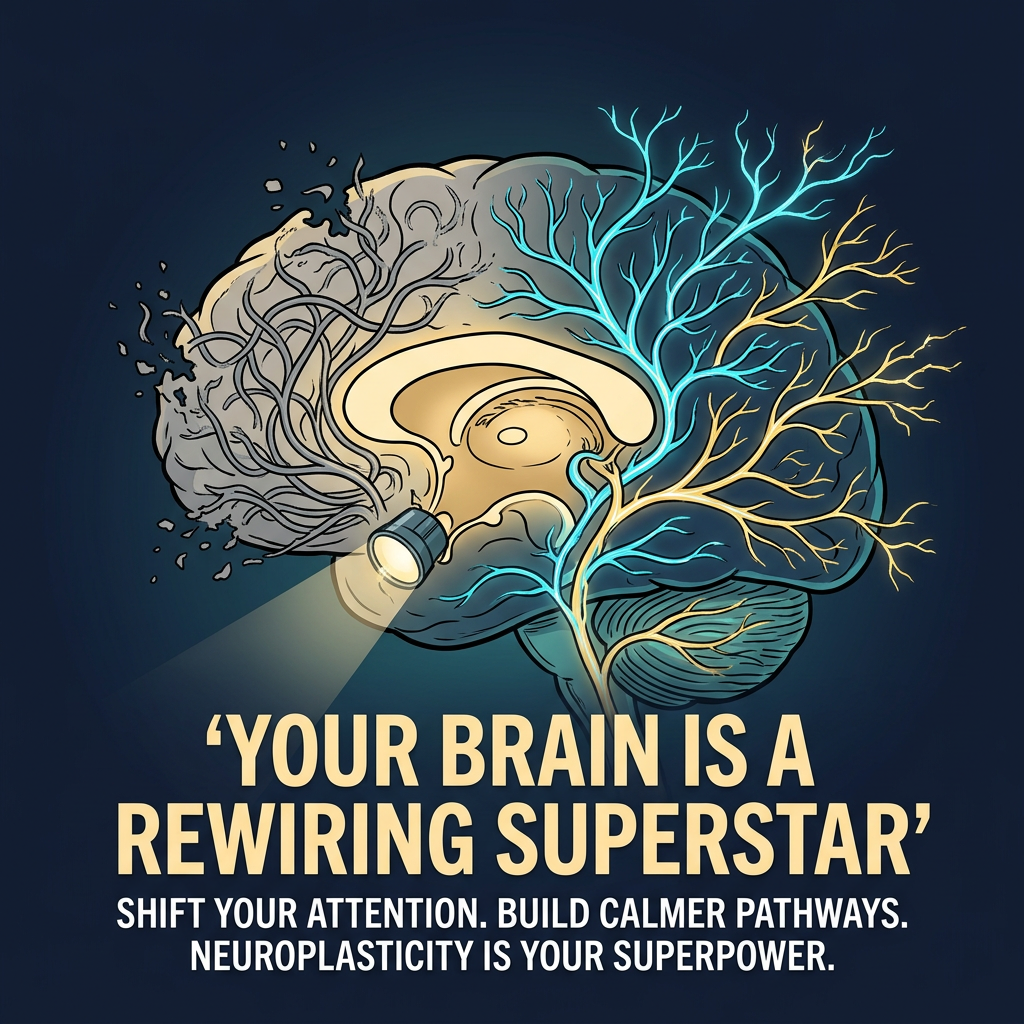
Ever feel like your brain is just… stuck? Like, “I’m just an anxious person,” or “I can’t stop overthinking, it’s just how I am.” It feels like a fixed label, right? Well, the fantastic news is that it’s actually a total myth.
Your brain isn’t a fixed computer; it’s more like a dynamic, ever-changing city.
This superpower is called neuroplasticity, and it’s the star of Norman Doidge’s The Brain That Changes Itself.
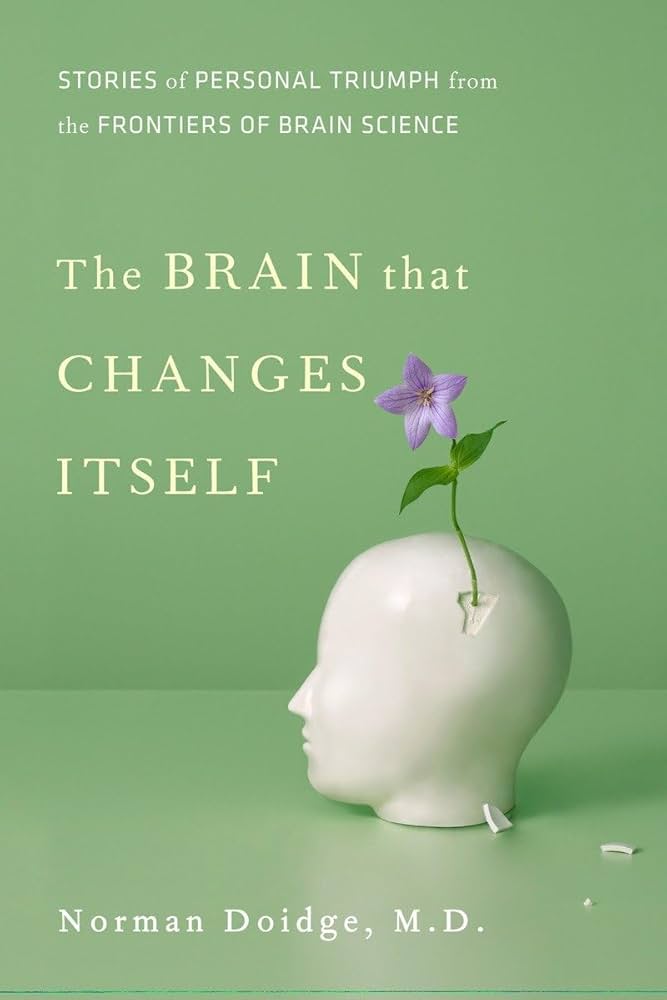
The book shows that your brain is constantly rewiring itself, building new “mental streets” and tearing down old ones based on what you do, think, and experience.
This is huge for anyone dealing with anxiety or tough memories.
It means those overwhelming thoughts aren’t permanent fixtures, they’re just well-worn habits in your brain.
There’s a chapter that focuses on a tool to actually change these habits, especially for obsessive-compulsive disorder (OCD).
It describes a simple Four-Step Method that you can use to respond differently to intrusive thoughts.
It’s about recognising a scary thought as just a symptom, not a truth, and gently moving your attention away from it.
Think of it this way: your brain has “fast lanes” for anxious thoughts.
Every time you give in, you’re paving that road a little more.
But by “refocusing” your attention ()even for a moment) you’re building a new, quieter path.
It’s tough at first, but do it often enough, and the old, noisy road will start to fade away.
It’s important to remember this isn’t a quick fix.
It’s a process that needs practice and support, but it’s a scientifically real one.
The bottom line is beautifully simple: You are not broken.
Your brain is just a little stuck in a pattern, and with patience, you have the power to gently reshape it.
That’s not just hopeful; that’s real science.